


jakafe
Ethiopia Halo Beriti Yirgacheffe G1 Washed
Ethiopia Halo Beriti Yirgacheffe G1 Washed
In stock
Prices are listed per 1kg excluding VAT and are subject to final approval.
GrainPro 60 kg packaging
🏞️ Region and Terroir
Halo Beriti is located in the Gedeb district, the southernmost and highest part of the famous Yirgacheffe region in the Gedeo Zone. This is where some of the most sought-after Ethiopian coffees originate, prized for their floral elegance, tea-like subtlety, and citrus freshness.
The landscape of Gedeb is dramatic and exceptionally green. Steep mountain slopes are covered with dense forests, with dozens of streams and rivers flowing between them. Thanks to the high altitude of 1,920–2,230 meters, coffee cherries ripen very slowly. This long growth cycle leads to higher bean density, distinct sweetness, and complex aromatics.
Coffee trees grow in the shade of native trees, especially Birbira and Acacia, which create a natural forest canopy. This stabilizes temperature, protects the soil from erosion, and promotes biodiversity. The soils are rich in organic matter and, together with regular rainfall, create ideal conditions for growing exceptionally high-quality Arabica.
🌍 Yirgacheffe – Ethiopia's Coffee Legend
Yirgacheffe is among the world's most famous coffee regions. Although administratively part of the broader Gedeo Zone, the name Yirgacheffe has become synonymous with a unique flavor profile: delicate floral notes, citrus, tea-like lightness, and brilliant clarity.
Ethiopia is considered the birthplace of coffee, and its mountains boast immense genetic diversity of Arabica. In the Gedeb region, coffee has been cultivated for generations on small garden farms, often in close proximity to family homes. It is this combination of traditional farming, high altitudes, and rich biodiversity that gives rise to some of the most distinctive coffees in the world.
👨🌾 Boledu Coffee and the Story of Halo Beriti
The processing station is operated by Boledu Coffee, a company founded in 2017 by two friends and partners: Abeyot Ageze and Mebrahtu Aynalem.
Abeyot Ageze
Abeyot comes directly from the Halo Beriti area and is a small-scale farmer himself. He previously oversaw the station's operations, and his deep knowledge of the local landscape, agricultural practices, and seasonal rhythm forms the basis of each lot's quality.
Mebrahtu Aynalem
Mebrahtu specializes in trade and connecting Ethiopian producers with the international specialty coffee market. His goal is to ensure that the quality created on the farms is fairly valued in the global market.
Together, they transformed Halo Beriti into one of Boledu Coffee's flagship stations – a place where respect for tradition meets a continuous pursuit of innovation.
👥 Community of Farmers
Halo Beriti works with over 1,000 smallholder farmers, each cultivating an average of approximately two hectares of land.
The farms are family-owned, and coffee is grown alongside other crops such as:
- enset (Ethiopian "false banana"),
- avocado,
- soy,
- sugarcane.
Boledu Coffee provides farmers with training, bonus payments for quality cherries, and a share of the profits from the previous season. This model supports long-term cooperation and stable quality.
🏭 Halo Beriti Processing Station
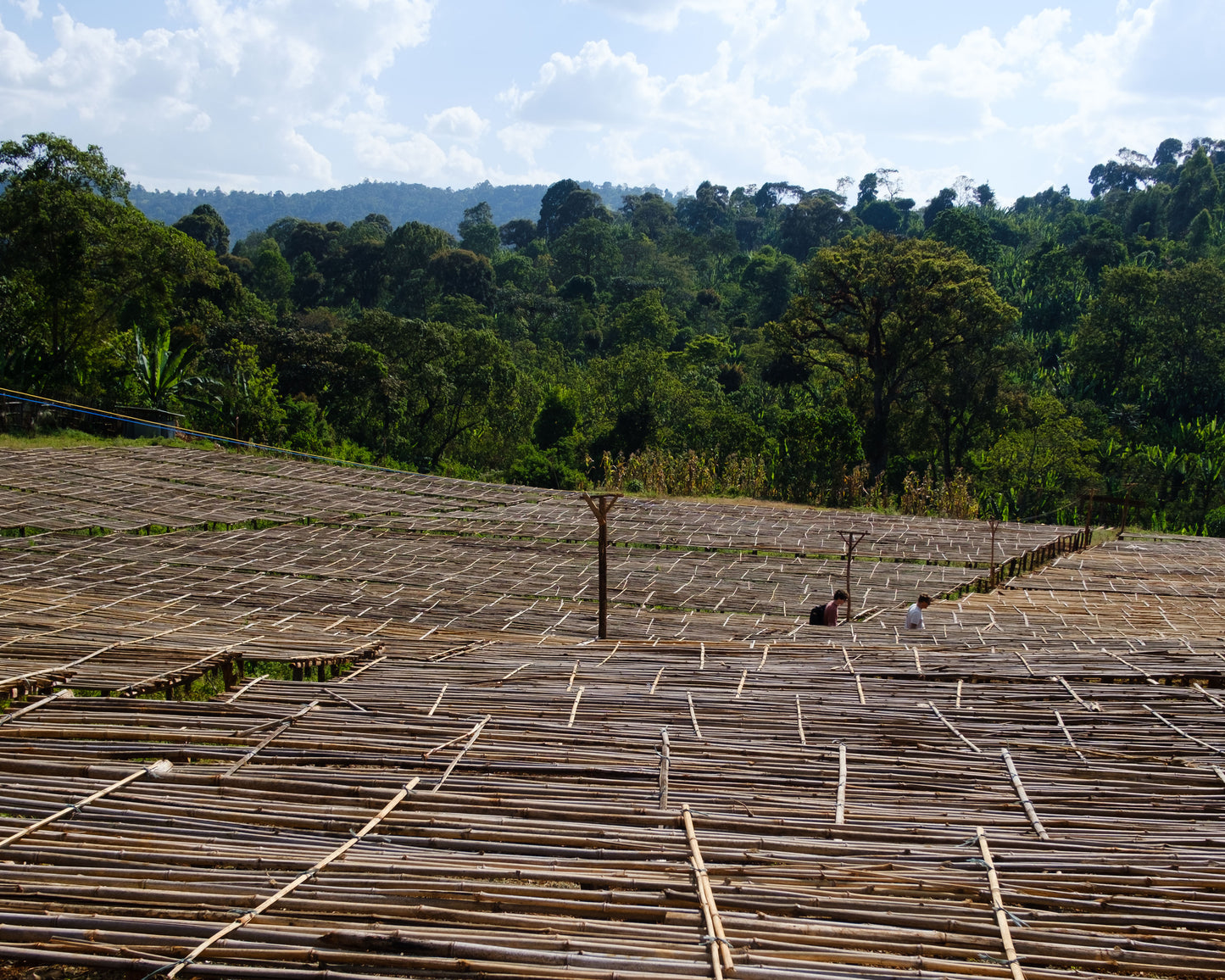
The station spans an area of approximately 4.8 hectares and features around 220 African drying beds.
It is located directly by the river, which provides clean water for washed processing. All wastewater is directed to sedimentation lagoons to prevent contamination of surrounding waterways.
Halo Beriti is known not only for traditional washed lots but also for experimental methods such as honey, anaerobic, and aerobic fermentation.
⚙️ Washed Processing
The washed process at Halo Beriti is designed to maximize the clarity and terroir character of Yirgacheffe.
Step by Step
Selective Harvesting
Farmers handpick only perfectly ripe cherries.
Reception and Sorting
Cherries are sorted and pulped immediately upon delivery.
Fermentation
Coffee ferments in water tanks for 48–72 hours, depending on ambient temperature.
Washing and Soaking
After fermentation, the parchment is thoroughly washed and often briefly soaked in clean water, which promotes cup clarity and structure.
Drying
The coffee is dried on raised African beds for 10–12 days until it reaches optimal moisture content.
Stabilization and Export
After drying, the coffee rests in parchment, then is prepared for dry mill processing and export.
Taste Profile: jasmine, peach, black tea, lime
Country of Origin: Ethiopia
Region: Yirgacheffe/Gedeb
Farm: Halo Beriti Washing Station
Farmer: Over 1000 farmers supplying to Halo Beriti
Altitude: 1920-2230 m.a.s.l.
Variety: Heirloom
Processing: Washed
Cupping Score: 84.75+
Crop: 25


Ask for quantity and price
Please also include the specific product you are interested in in the text.